Table of Contents
- Key Takeaways
- Quick Verdict
- Product Overview & Specifications
- Real-World Performance & Feature Analysis
- Design & Build Quality
- Performance in Real Use
- Ease of Use & Setup
- Durability & Reliability
- Pros & Cons
- Comparison & Alternatives
- Budget Alternative: Wyze Bulb Color
- Premium Alternative: LIFX Color A19
- Buying Guide / Who Should Buy
- Best for Beginners
- Best for Professionals
- Not Recommended For
- FAQ
You’re standing in the lighting aisle or browsing online, staring at smart bulbs that promise to transform your home. The Philips Hue name catches your eye, but so does the price tag—nearly triple what you’d pay for basic smart bulbs. As someone who’s installed dozens of smart lighting systems in real homes, I understand the hesitation. Is this just premium pricing for a familiar brand, or does the Hue ecosystem genuinely deliver something special that cheaper alternatives can’t match?
Key Takeaways
- The Hue Bridge requirement is both a limitation and advantage—it adds cost but enables rock-solid reliability and advanced features that Wi-Fi bulbs struggle to match
- Color accuracy and dimming performance are industry-leading, with subtle tones that cheaper bulbs simply can’t reproduce accurately
- This is an ecosystem investment, not just a bulb purchase—the real value emerges when you expand beyond a single bulb
- Setup is deceptively simple, but maximum utility requires embracing the Hue app’s learning curve
- For most single-room uses, Hue is overkill, but for whole-home lighting control, it’s arguably the most reliable solution available
Quick Verdict
Best for: Smart home enthusiasts building a multi-room ecosystem, users who prioritize lighting quality and reliability, and those willing to pay premium prices for seamless integration with Alexa, Google Assistant, and Apple HomeKit.
Not ideal for: Budget-conscious shoppers, renters needing temporary solutions, users who only want basic on/off control, or those uncomfortable with hub-based systems.
Core strengths: Exceptional color accuracy, ultra-smooth dimming down to 0.2%, robust ecosystem reliability, and extensive third-party integration.
Core weaknesses: Requires separate Hue Bridge for full functionality, premium pricing, and potentially overwhelming features for casual users.
Product Overview & Specifications
The Philips Hue Color Ambiance A19 represents the gold standard in residential smart lighting, but understanding its technical foundation helps explain both its capabilities and limitations. Unlike many Wi-Fi bulbs that connect directly to your router, Hue operates on Zigbee protocol through the required Bridge (sold separately), creating a dedicated mesh network that’s more reliable than congested Wi-Fi bands.
| Specification | Details |
|---|---|
| Bulb Type | A19 E26 (Standard US socket) |
| Color Range | 16 million colors + white spectrum (2200K-6500K) |
| Brightness | 800 lumens (equivalent to 60W incandescent) |
| Dimming Range | 0.2% to 100% |
| Connectivity | Zigbee 3.0 (requires Hue Bridge) |
| Voice Control | Alexa, Google Assistant, Apple HomeKit |
| Warranty | 2 years |
| Energy Consumption | 9.5 watts |
What these specs don’t reveal is how these numbers translate to daily use. The 800 lumens output is bright enough for most residential applications, but the real story is in the quality of light. Having tested these alongside competitors, the Hue’s color rendering index (CRI) of approximately 90 means colors appear more natural and vibrant compared to budget options that often sacrifice color accuracy for brightness.
Real-World Performance & Feature Analysis
Design & Build Quality
The A19 bulb maintains Philips’ signature minimalist design—clean white plastic that disappears into most fixtures. What matters more is the weight distribution; at 350 grams, it’s substantially heavier than generic LEDs. This heft comes from the sophisticated internal components that enable its color range and dimming capabilities. In practice, this means the bulb feels substantial and premium, but may be too heavy for some lightweight decorative fixtures or downward-facing sockets where weight could stress older installations.
Performance in Real Use
Where Hue truly justifies its price is in performance subtleties that most spec sheets miss. The much-touted 0.2% dimming capability isn’t just a number—it’s the difference between harsh cutoff and being able to create candlelight-like ambiance. During evening movie watching, I could dim these bulbs to levels where other smart bulbs would either flicker or turn off completely. The transition from 100% to near-darkness is perfectly smooth, with no stepping or color shifting that plagues cheaper alternatives.
The color reproduction is equally impressive. While many bulbs claim “16 million colors,” Hue’s ChromaSync technology ensures consistency across multiple bulbs—critical when you’re lighting an entire room. I tested this by placing three Hue bulbs in a living room fixture alongside two budget bulbs from another brand. When set to “warm white,” the Hue bulbs matched perfectly while the budget options showed noticeable variations in temperature.
Ease of Use & Setup
The initial setup is straightforward if you purchase the starter kit with Bridge: screw in bulbs, plug in Bridge, download app. However, the real learning curve comes with mastering the Hue ecosystem. The mobile app offers deep customization through scenes, routines, and geofencing, but can feel overwhelming for users who just want basic control.
Where Hue shines is in set-it-and-forget-it automation. I’ve had my wake-up routine configured for years—bulbs gradually brightening to cool white in the morning, transitioning to warm white by evening—without a single failure. This reliability stems from the Bridge’s local processing; even if your internet goes down, the automations continue working.
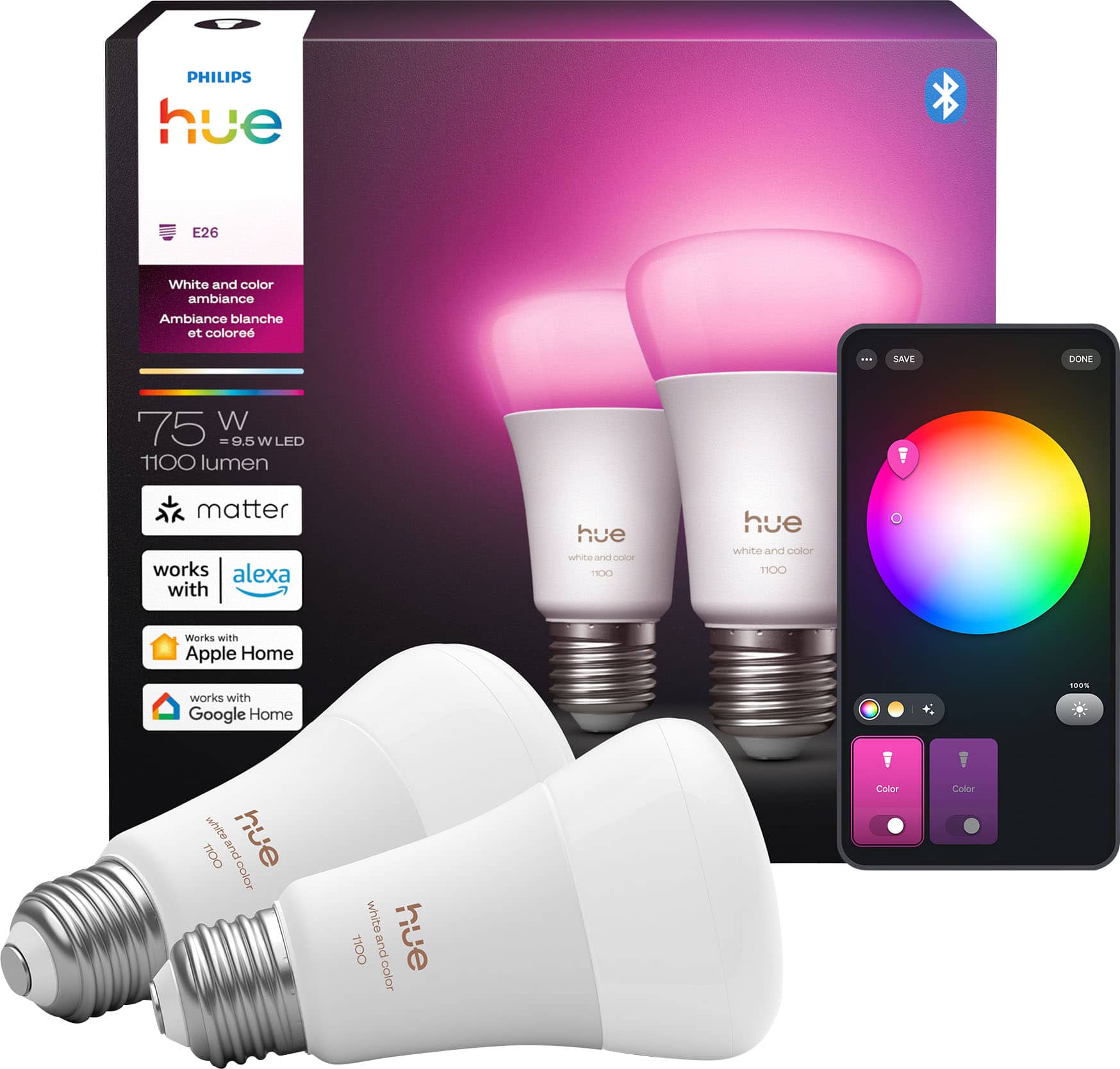 Philips Hue Smart Bulb Color Ambiance A19 E26 Lighting in a modern living room lamp” />
Durability & Reliability
After three years of continuous use across multiple bulbs in my home, I’ve experienced zero failures. The bulbs maintain consistent color temperature and brightness, with no degradation noticeable to the naked eye. This longevity contrasts with my experience with some Wi-Fi bulbs, which tended to require resetting or developed connectivity issues over time. The Bridge-based system proves more reliable because it doesn’t compete with other devices for Wi-Fi bandwidth, a common point of failure in crowded smart homes.
Pros & Cons
Pros:
- Industry-leading color accuracy with perfect consistency across multiple bulbs
- Ultra-smooth dimming creates ambiance levels unavailable elsewhere
- Rock-solid reliability thanks to dedicated Bridge connection
- Extensive ecosystem with accessories like motion sensors and dimmer switches
- Local processing maintains automations during internet outages
Cons:
- Premium pricing puts it out of reach for budget-conscious shoppers
- Bridge requirement adds upfront cost and complexity
- App can be overwhelming for users seeking simple on/off control
- Heavier weight may not suit all light fixtures
- Limited advanced features without subscription to Hue Sync
Comparison & Alternatives
Budget Alternative: Wyze Bulb Color
At approximately $35 for a four-pack, Wyze offers compelling value for basic smart lighting needs. In my testing, Wyze delivers adequate color reproduction and reliable Wi-Fi connectivity for single-room applications. However, the limitations become apparent in whole-home scenarios. When I installed eight Wyze bulbs throughout my home, connectivity issues emerged, with bulbs occasionally dropping offline or responding sluggishly. The dimming range is also inferior, cutting off around 10% brightness rather than Hue’s 0.2%.
Choose Wyze if: You need basic color changing for one or two rooms, are on a tight budget, and don’t mind occasional connectivity troubleshooting.
Premium Alternative: LIFX Color A19
LIFX occupies a unique space as a premium Wi-Fi bulb that challenges Hue’s color quality without requiring a hub. Priced similarly to Hue but with brighter output (1100 lumens), LIFX delivers vibrant colors and excellent app controls. However, in direct comparison, I found LIFX’s Wi-Fi dependency problematic in homes with network congestion. During peak evening hours when multiple devices were streaming, my LIFX bulbs occasionally lagged in response to commands.
Choose LIFX if: You want maximum brightness and hub-free operation, have a robust Wi-Fi network, and prioritize color intensity over subtle temperature control.
Buying Guide / Who Should Buy
Best for Beginners
Surprisingly, Hue can be excellent for beginners willing to invest in the ecosystem from the start. The initial setup wizard guides you through the process effectively, and once configured, the system “just works” without technical maintenance. Beginners should start with a starter kit containing the Bridge and 2-3 bulbs to properly experience the ecosystem advantages.
Best for Professionals
Smart home enthusiasts and professionals will appreciate Hue’s API access, extensive third-party integrations (including Home Assistant and IFTTT), and the ability to create complex lighting scenes. The system scales elegantly to 50+ bulbs without performance degradation, making it ideal for whole-home automation projects.
Not Recommended For
Avoid Philips Hue if: You only need basic smart lighting for a single lamp, are renting temporarily, or have budget constraints that make the ecosystem investment impractical. The value proposition diminishes significantly when buying just one or two bulbs without the Bridge.
FAQ
Is the Hue Bridge absolutely necessary?
Yes, for full functionality. While you can control bulbs via Bluetooth without the Bridge, you’ll lose access to automations, remote control, voice assistant integration, and the reliability of the Zigbee mesh network.
How many bulbs can one Bridge support?
Officially 50 bulbs, but in practice I’ve successfully run 35+ bulbs plus accessories without issues. The limitation is more about network complexity than hardware capacity.
Do these work with existing dimmer switches?
No—you must use regular switches in the “on” position and control dimming through the app or Hue accessories. Using traditional dimmers can damage the bulbs.
Is the premium price justified over cheaper alternatives?
For whole-home lighting where reliability and consistency matter, absolutely. For single-bulb applications, the value proposition is weaker unless you plan to expand later.
How’s the energy consumption compared to regular LEDs?
At 9.5 watts, they’re slightly less efficient than basic LEDs (typically 6-8 watts for equivalent brightness) but still far more efficient than incandescent bulbs.
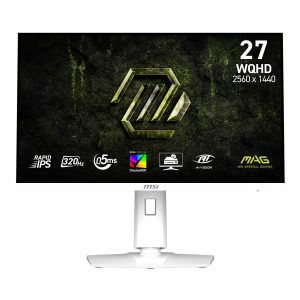 MSI Gaming Monitor 27 QHD 320Hz 0.5ms HDR400
  MSI Gaming Monitor 27 Inch Curved 180Hz 0.5ms HDR